
01 · LeavingA category of one
George Weah grew up in Clara Town, a waterfront neighbourhood of Monrovia, and played his early football in Liberia before Arsène Wenger — then coaching Monaco — brought him to Europe in 1988. The move opened a sequence that ran through Paris Saint-Germain and then to AC Milan, where he spent the peak years of his career. At Milan he was a forward built for the highest level: technically refined, physically imposing, capable of the kind of individual goal that press boxes note down and replay for decades. The goal he scored against Verona in 1996 — collecting the ball in his own box, carrying it the length of the pitch, and finishing without a teammate touching it — is still cited when people argue about what the position can ask of a body.
The Ballon d'Or ↗ had been running since 1956, and for most of its history it was restricted to European players. France Football opened the vote to all nationalities in 1995, and Weah won it in the same year — the first edition under the new terms. That is not a footnote; it is the architecture of the achievement. He was the first African eligible to win, and he won. He also took the FIFA World Player of the Year award the same calendar year, a double that underlined the margin. The combination meant Liberia, a country without a World Cup appearance to its name, held the individual prize above every player in every federation.
02 · LeavingWhat the award did not come with
Liberia never qualified for a World Cup during Weah's playing years, which is the other side of the ledger. He was his country's best outfield player and, for a period, its most visible public figure — he funded the national team's travel and equipment costs from his own earnings when the football federation could not cover them. The arithmetic of FIFA's quota system meant Liberia was always fighting through a CAF qualifying structure that sent only a handful of teams to the finals. A player of Weah's individual quality could not by himself alter those odds.
His career continued after Milan through Chelsea, Manchester City, Marseille and Al-Jazira before he retired. The post-football record is documented in a way that applies to very few players from any country: he entered Liberian politics, served in the Senate, and was elected President of Liberia in 2017, taking office in January 2018 — the first elected head of state in Africa with a background in professional football. The Carter Center monitored the 2017 election and confirmed the result as credible. The transition was also the first peaceful handover of power between elected governments in Liberia in over seven decades.

Liberia never qualified for a World Cup in his playing years, which is the other half of the record.
Picture desk03 · LeavingThe distance to the next
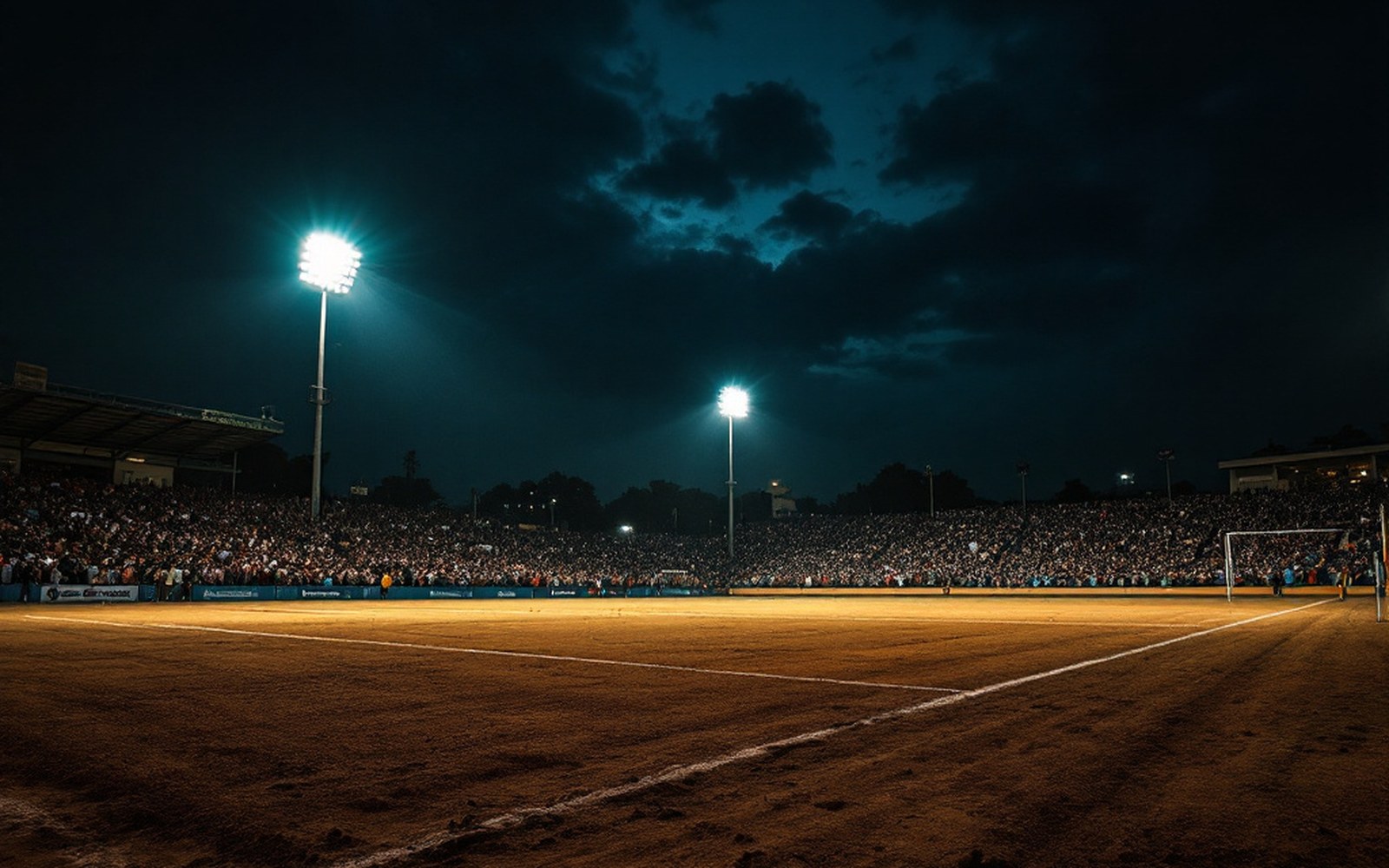
One award, opened to the world in 1995.
Picture deskSamuel Eto'o won the African Footballer of the Year four times and collected Champions League medals with Barcelona and Internazionale. Didier Drogba took the Premier League title and the Champions League with Chelsea and carried Ivory Coast through a period of consistent World Cup qualification. Both careers would have been plausible Ballon d'Or contenders in a different era of voting, or a different distribution of attention. Neither won it. The award has since returned to a model that favours players at a small number of European clubs, and the structural conditions that make an African winner improbable — the weighting of Champions League performance, the concentration of votes among European journalists — have not materially changed.
Weah's 1995 award remains, therefore, precisely what it was the morning after it was announced: singular. The category it opened has stayed closed.