
01 · LeavingA January tournament is not an accident
The Africa Cup of Nations — known as AFCON — runs every two years, and since 1968 it has been staged in January and February with barely an exception. The reason is climatic, or at least it began that way: the northern hemisphere summer, when West and Central African nations might otherwise host, is also their rainy season. Pitches become unplayable. January, sitting in the northern dry season, is the workable window for the host countries.
That the window also sits dead inside the European club season is the kind of structural collision the game's governance has never managed to resolve, because resolving it would require CAF — the Confederation of African Football — to move its flagship competition into the European off-season, and no such off-season, long enough and predictable enough, exists in Africa. The rains come when they come.
So European clubs that employ AFCON-eligible players lose them for four to six weeks every other January. Not on loan, not for a fee — they release them under FIFA's regulations, which oblige clubs to release players for international duty during designated windows ↗. The clubs do not choose. What they receive in return is nothing, unless the player is injured while on international duty, in which case FIFA's regulations provide some protection — though the precise scope of that protection has been litigated more than once.
02 · LeavingWhy the clubs keep complaining, and why nothing changes
The Premier League, the Bundesliga, Serie A, La Liga — every major European competition is built around a fixture schedule that treats January as ordinary time. There are no scheduled winter breaks long enough to absorb AFCON. When a club loses its striker for six weeks at the turn of the year, it absorbs that loss in dropped points, substituted transfers and squad patches. The complaint is routine enough that it barely makes news now except in aggregate: before a tournament begins, the European leagues publish how many of their registered players have been called up, and the number is always in the hundreds.
The clubs' position — sometimes stated, sometimes only implied — is that the African game is being subsidised by European employers. The academy pipelines from Abidjan and Dakar produce players, European clubs contract them, and then those clubs must release them whenever the continental calendar requires it. That the clubs profit enormously from those players' labour for the other forty-six weeks of the year is not usually part of the complaint, but it sits in the background of every negotiation.
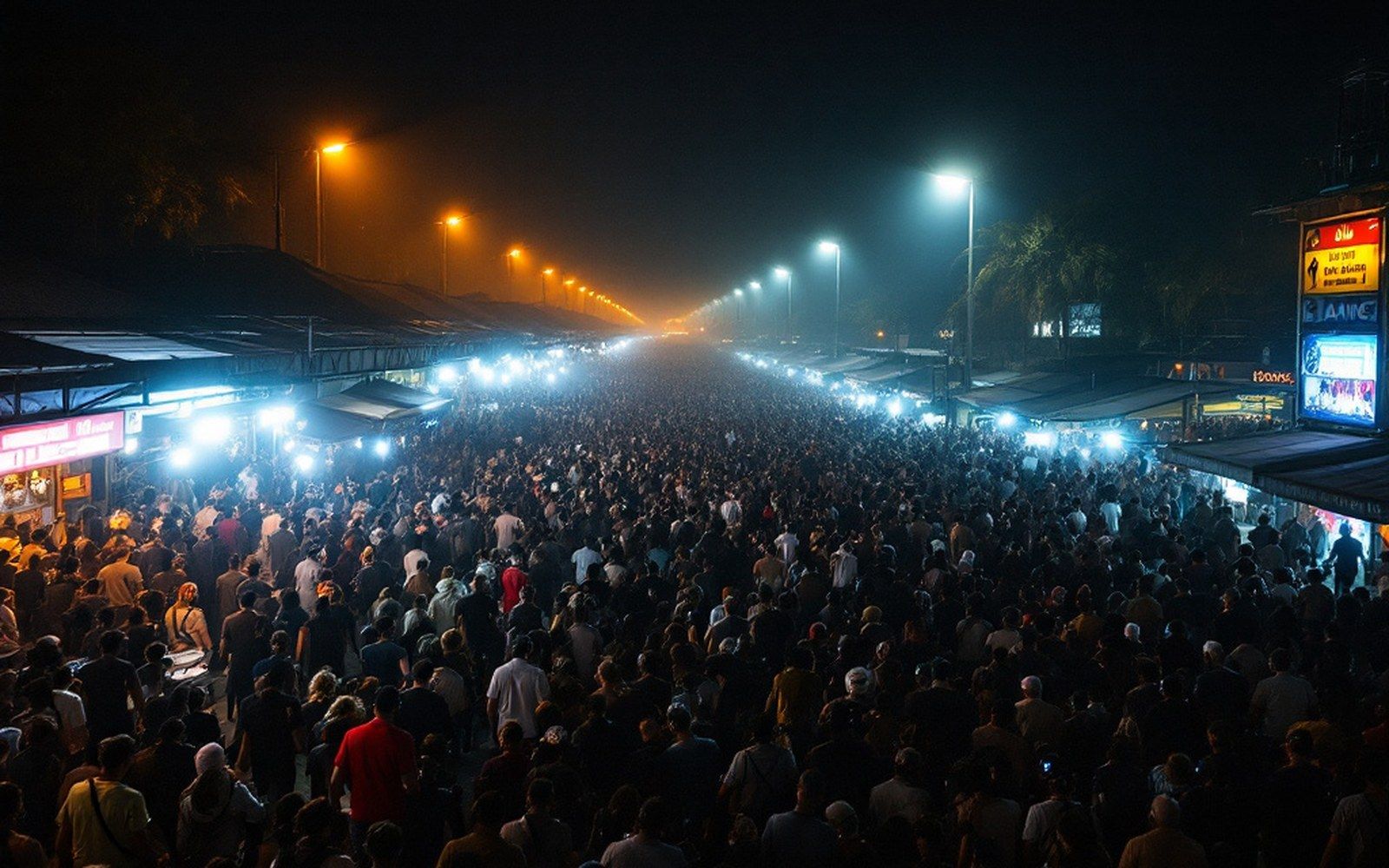
A continental tournament with its own history, held in the weeks European clubs consider theirs.
Picture deskCAF's position has been equally firm: AFCON belongs to African football and its scheduling is an African decision.
The argument occasionally surfaces as an offer — in 2017, CAF announced that it would move the tournament to June and July from 2019, partially in response to European pressure. It made that move, and held the 2019 edition in Egypt in June and July ↗. Player welfare was one stated rationale; reducing conflict with European clubs was another.
The experiment lasted one cycle. By the time the 2021 tournament arrived — delayed to January 2022 because of the pandemic — AFCON was back in its old window, played across Cameroon. The June timing had created its own problems: African domestic leagues, which tend to run August through May mirroring Europe, found their seasons disrupted just as badly in summer as European leagues found theirs disrupted in winter. There was no neutral scheduling that served everyone.
03 · LeavingWhat it actually costs a squad, and a career

The players in dispute are the ones the academies exported.
Picture deskThe players in the middle of this are largely not the ones making the argument. For Samuel Eto'o, for Didier Drogba, for every generation of African players who reached the top of the European game, AFCON was a competition they wanted to win — it was the one major trophy that had actually eluded some of the best: Drogba's Ivory Coast never won it while he was their defining player. The tournament mattered to them as the tournament, not as a fixture crisis.
What does affect careers is the arithmetic of absence. A player who is available for forty-two league games in a season is more valuable in the transfer market than one who is available for thirty-six. Insurance provisions under FIFA regulations cover clubs for salary costs during injury on international duty, but that provision does not cover the straightforward performance loss of having the player absent. A player approaching a contract negotiation at a club where his AFCON absences have coincided with his team's worst results faces a real, if informal, cost.
There is also the question of squad depth across the confederations. AFCON draws from CAF's 56 member associations ↗, and the majority of the players those associations select now earn their living in Europe. A country fielding its strongest possible team for AFCON is fielding players whose clubs are simultaneously trying to manage without them. The deeper the European season goes, the more a player's club form might be affected by the miles, the matches and the emotional weight of international competition.
04 · LeavingThe institutional argument it reveals
The fixture clash is ultimately about who has the authority to structure football's calendar, and how that authority is distributed when the game's economic centre and the game's demographic engine are geographically separate. Europe generates the money; Africa generates, at extraordinary rates, the players. FIFA sits above both confederations in the governance hierarchy, but FIFA's calendar regulations leave the details of each confederation's competition schedule to the confederation itself. There is no FIFA rule that says AFCON must move.
What that means in practice is that the argument gets re-run before every tournament, with the same positions on both sides, and AFCON goes ahead in January. The clubs adjust, the national associations celebrate having their players, and the players themselves navigate the dual obligation without anyone in governance having to resolve the underlying tension. The system is not broken, strictly speaking. It just produces costs that land on players and clubs rather than on the institutions doing the arguing.